

A Guide to your Living Ecosystem
Welcome to your living ecosystem.
With the right care, your custom closed terrarium can stay healthy and vibrant for years.
This terrarium care guide address the most common concerns and provide clear, actionable advice to help your miniature ecosystem thrive naturally.
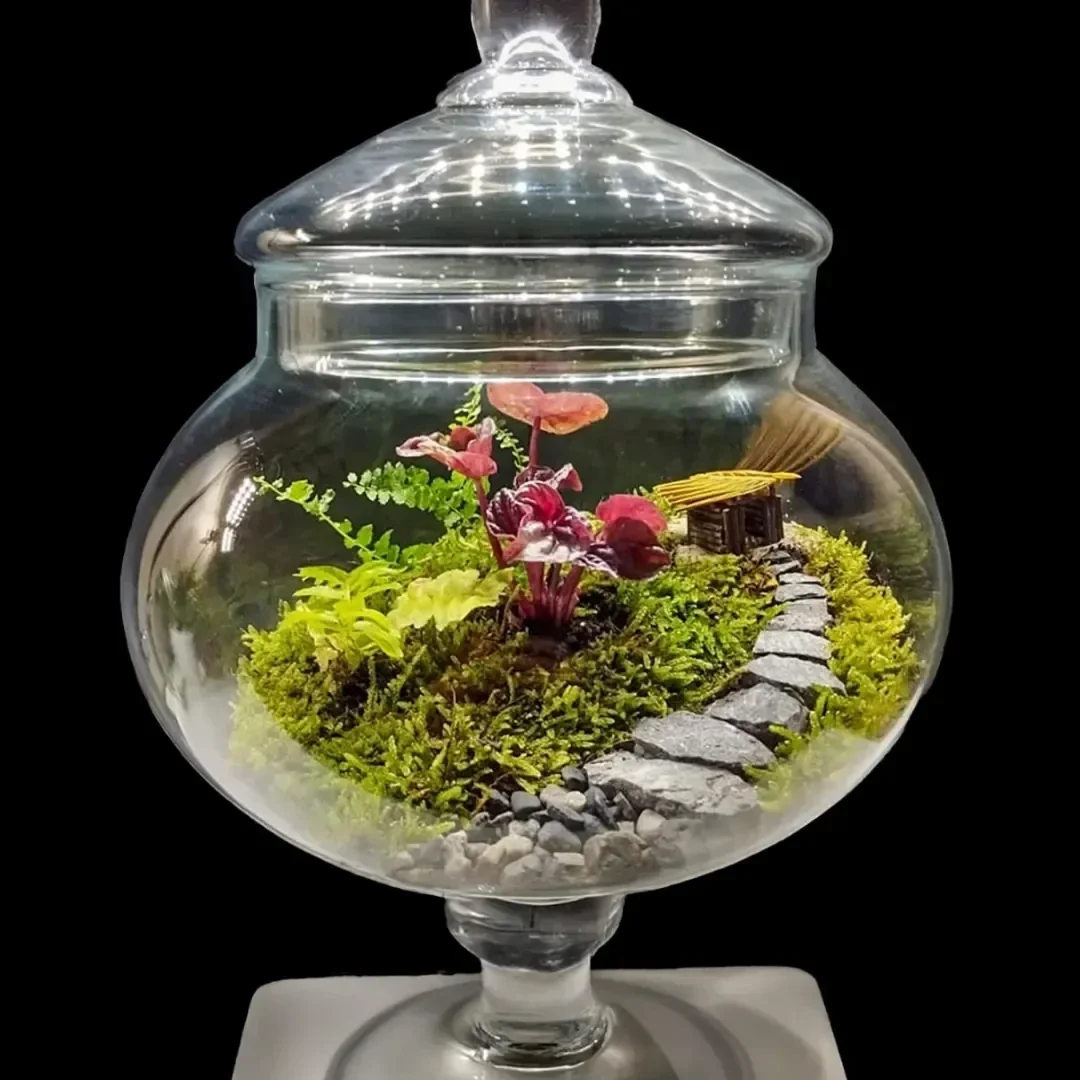
Location & Light
Terrariums can thrive under a range of lighting environments.
• Keep your Terrarium anywhere from Bright, Indirect Light, to Low-Light conditions.
• Avoid direct sunlight, which can overheat the glass and damage plants.
• If natural light is limited, a small LED light on top is a good supplement (optional).
• Maintain a stable indoor temperature: ideally 18–24 °C (65–75 °F). Avoid placing near heaters, radiators, or cold drafts.
• Once your terrarium has settled, avoid any drastic changes to lighting/temperature.
Watering & Humidity
Terrariums require minimal watering due to their natural water cycle. Look for condensation inside the glass.
• Healthy Condensation: Water droplets covering up to 1/4 of the glass is ideal.
• Remember that overwatering is the biggest killer of Terrariums, water only when necessary.
• If heavy condensation persists throughout the day or water pools at the bottom, remove the lid for a few hours/days.
• Mist lightly (2–3 sprays) when there is no morning/night condensation.
• Use filtered, distilled, or dechlorinated water only.
Cleaning & Trimming
Care approaches differ and come down to personal preference, Some enjoy allowing their Terrariums to do their own wild thing, while others enjoy regular maintenance.
• Remove dead leaves or debris regularly, Trim plants if they grow too tall or dense.
• Clean the outside glass with a soft cloth or a kitchen towell.
Springtails & Bioactivity
A balanced terrarium is a living ecosystem, where springtails play a key role in waste breakdown and overall system health.
• Springtails are a natural cleaning crew that eat dead leaves and mold, keeping the soil healthy. If they boom in number, it’s a sign of excess moisture.
• If the terrarium stays dry too long, they might die — though this is uncommon.

“With proper care, terrariums can regain their vitality even after periods of stress.”
Common problems and quick tips:

Overwatering → Mold & Fungus
• If mold appears, improve airflow by leaving the lid open for a couple of hours a day.
• Repeating this for 1–2 weeks usually allows the terrarium to rebalance naturally.
• If needed, a very light mist of a plant-safe fungus treatment can help speed up recovery.
Pests → Fungus Gnats
•Fungus gnats can occasionally appear in terrariums and are part of a natural indoor ecosystem.
• Beneficial nematodes in the terrarium help control larvae within the substrate.
• Removing adult or flying gnats when visible helps break their breeding cycle and protects plant health.
Designed to Thrive Naturally
At Terrarium Care Guide, we create miniature living ecosystems designed to thrive with minimal intervention.
This guide supports the balance of your terrarium, crafted with care in Dublin, Ireland.